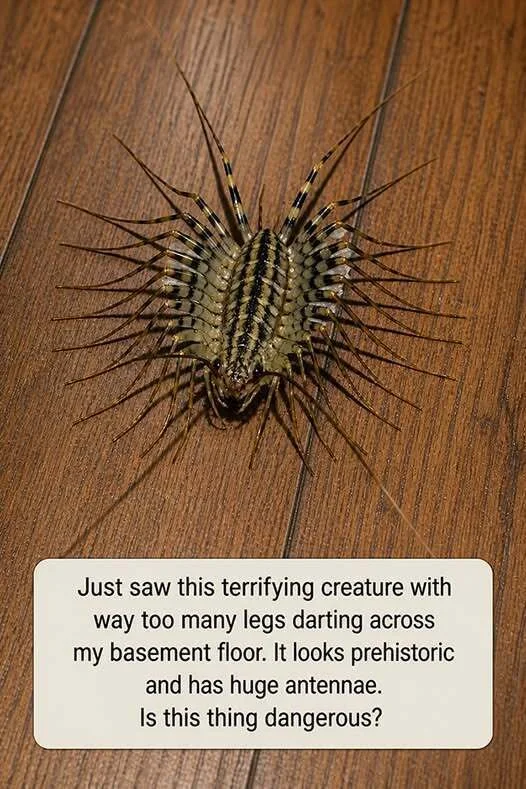
You catch a glimpse of something darting across the floor—long body, a blur of legs, antennae whipping forward like feelers from another world. It’s enough to make anyone jump.
In most cases, that creature is a house centipede. It looks alarming, but the reality is far less dramatic than its appearance suggests.
What Makes It So Unsettling?
- Too many legs: Up to 15 pairs, moving in a wave-like motion
- Speed: Fast enough to vanish in seconds
- Long antennae: Constantly sensing its surroundings
All of this combines into something that feels more “alien” than familiar.
Is It Dangerous?
Not really.
- House centipedes do have venom, but it’s meant for tiny insects
- Bites are extremely rare
- If one happens, it’s usually mild—similar to a small bee sting
They’re shy and avoid humans whenever possible.
Why It’s in Your Home
They’re drawn to:
- Moisture (basements, bathrooms)
- Dark, quiet spaces
- Food sources (other insects)
If you’re seeing one, there are likely smaller bugs around too.
The Unexpected Benefit
Despite how they look, house centipedes are actually helpful. They feed on:
- Cockroaches
- Spiders
- Termites
- Silverfish
In other words, they quietly reduce the pests you really don’t want.
What Should You Do?
If it bothers you:
- Trap it with a cup and release it outside
- Lower humidity with a dehumidifier
- Seal cracks and clean regularly to reduce insects
If you’re seeing many of them, it may be worth addressing a larger pest or moisture issue.
The Bottom Line
It may look like something prehistoric, but it’s not a threat.
That fast, creepy visitor is:
- Not aggressive
- Not dangerous
- Actually useful
You don’t have to like it—but you also don’t need to fear it.
FAQ Schema Questions
Can a house centipede bite humans?
Yes, but bites are very rare and usually mild.
Why do house centipedes come into homes?
They are attracted by moisture and other insects.
Are house centipedes good to have around?
Yes, they help control pests like cockroaches and spiders.
Should I kill a house centipede?
Not necessarily, because they are beneficial predators
Disclaimer: This article is for informational purposes only and should not be considered professional pest control or medical advice. If you experience an allergic reaction from an insect bite or have a serious pest infestation, consult a healthcare provider or licensed pest control professional.