In a world filled with constant distractions and fast-paced living, finding moments to challenge our minds and spark curiosity can seem like a luxury.
Yet, puzzles and brain teasers offer more than just a break from the mundane—they provide a gateway to deeper intellectual exploration and personal growth.
These seemingly simple challenges have the power to expand our mental horizons, sharpen our problem-solving skills, and unlock new ways of thinking.
Riddles often rely on the solver’s ability to observe details that others might miss.
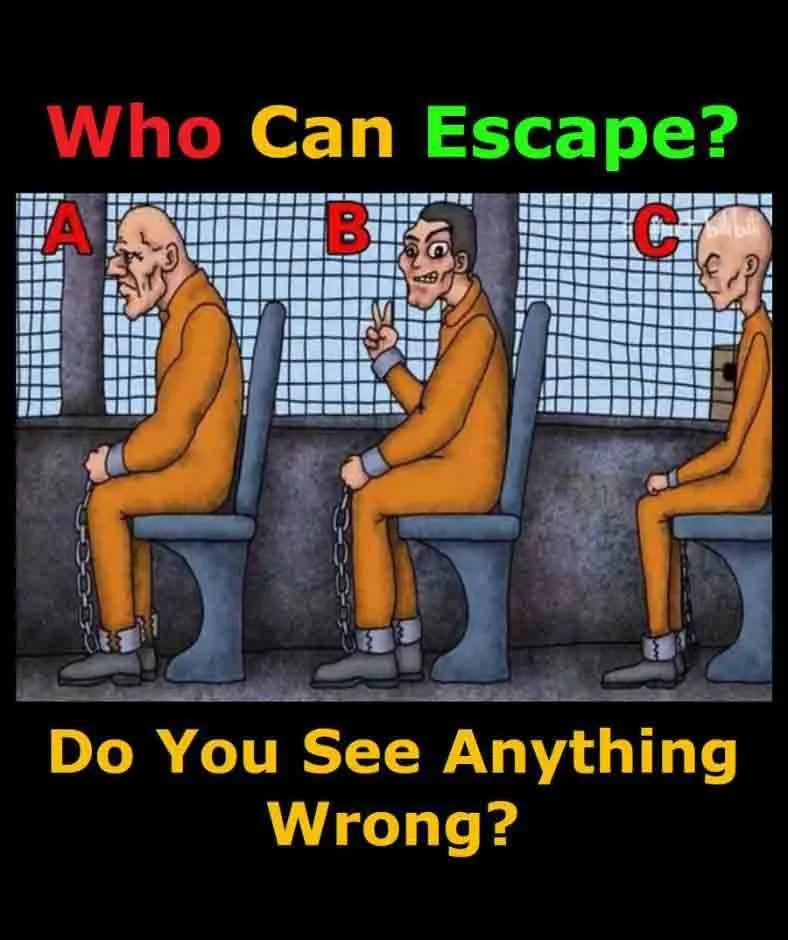
For example, a riddle might ask, “Who Can Escape?” requiring the solver to carefully examine the situation and notice subtle differences, such as the looseness of a character’s cuffs.
This focus on observation sharpens the mind and trains you to pay attention to the small details that can make all the difference.
A
B
C
ANSWER:

FAQ Schema
What is the answer to the Who Can Escape puzzle?
The answer depends on noticing small visual clues, such as which character has the loosest cuffs.
Are brain teasers good for your brain?
Yes. Puzzles can improve observation, concentration, and problem-solving skills.
Why are observation puzzles so difficult?
They often rely on tiny details that many people overlook.
Can solving puzzles improve memory?
Regular mental exercises may help strengthen memory and cognitive skills
Disclaimer: This puzzle is intended for entertainment and educational purposes only. It is not a scientifically validated intelligence or cognitive assessment.