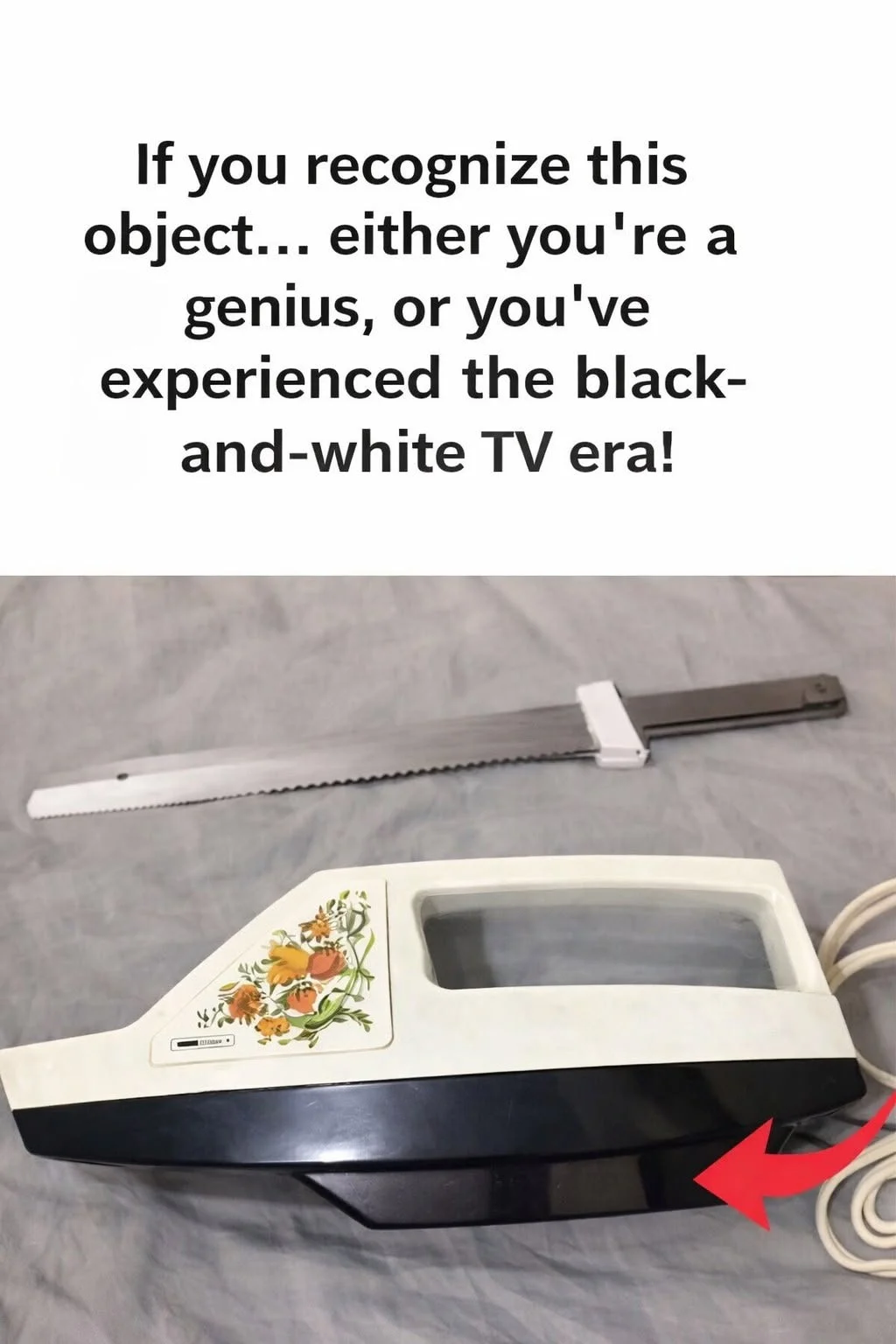
At first glance, it looks like a vintage iron decorated with a charming floral design. But this unusual gadget has nothing to do with pressing clothes. It is actually an electric kitchen saw, built to slice meat with surprising precision and power. Its handle looks like something from an old vacuum cleaner, while the serrated blade locks into place with a sharp click. Once plugged in, it lets out a high-pitched buzzing sound that immediately warns everyone nearby that something is about to be carved.
From the 1960s through the 1980s, this quirky tool became popular in homes during holiday dinners. Families proudly brought it out to carve turkey, ham, or roast beef in front of guests. It was seen as modern, impressive, and far more exciting than using a regular carving knife.
Of course, not everyone was completely comfortable watching it in action. The loud noise and sharp moving blade could make people nervous, especially when someone was slicing a holiday turkey at the table. Still, it remained a favorite gadget for families who wanted to show off the latest kitchen technology.
Today, the electric kitchen saw is mostly a collector’s item, but many still work perfectly. Some old-school cooks continue to use them for cutting tough meats. And honestly, if there were ever an apocalypse, this strange little machine might still earn a place in someone’s survival kit—as long as there is an outlet nearby.
What is a vintage electric kitchen saw?
It is an electric carving knife designed to cut meat such as turkey, ham, and roast beef.
When were electric carving knives popular?
They became especially popular from the 1960s through the 1980s.
Do vintage electric knives still work?
Many older models still function and are used by collectors and home cooks.
Are vintage electric carving knives collectible?
Yes. Certain models are sought after by collectors of retro kitchen appliances.
Disclaimer: This article is for informational and educational purposes only. Vintage electrical appliances should be inspected carefully before use, as older wiring and components may not meet modern safety standards.